31.07.2022
1145

31.07.2022
1145
15.06.2021
800
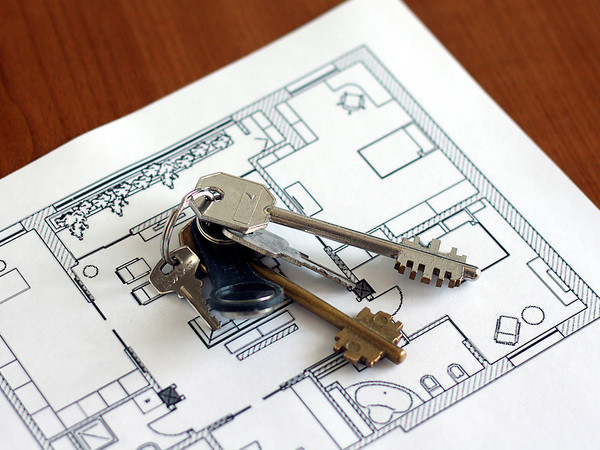
Several owners of premises “under one roof” is a priori a problem for each of them! The scenario is usually classic – banal misunderstandings turn into requests to limit each other’s use of common real estate. The consequences are things under the balcony or behind the gate, changed locks, moral pressure and even fights.
Carefully familiarize yourself with the civilized methods of solving the problem! Yes, there are 2 legal options for “peaceful” determination of the order of use of residential premises: establishment of the order of use of common property and separation (allocation) of shares from common property in kind. Application of both is possible both through the court and by personal agreement of the parties.
It provides for the settlement of a disputed situation by concluding a contract in written form, which clearly establishes the rules of joint ownership and use of a common living space. At the same time, the utility bills are not divided, the contract specifies the obligations of the parties to pay for services to the party to which the account is registered.
At the request of the parties, the contract can be notarized. In this case, the fulfillment of its conditions will be obligatory for the subsequent owners of the object.
This method is quite understandable and does not need to be detailed, but the solution of the problem through the court is worth considering in more detail.
It provides for the settlement of the dispute in cases where the parties cannot independently determine the order of use of the common living space. Depending on the situation, the court divides and limits the rights of co-owners within the limits of actual ownership and use and resolves the following issues:
The distribution of a part of the common property in kind is a painstaking way, as it depends on many nuances, and for co-owners it is one of the best. After all, the result will be separate housing for everyone!
Let’s point out the main points of this variant of solving the problem.
As already mentioned above, it is used only if there is a technical possibility or if there are conditions for its implementation.
Therefore, the goal is to divide housing into separate objects, so that each owner gets his “personal space”.
The procedure of achievement is the technical reconstruction of the object, the result of which should be 2 separate proportional parts of the co-owners of the housing with different addresses assigned to them and, accordingly, bills for the utility.
If it is not “proportionately divided” – the division is carried out with compensation for the person who received a smaller area than the one has. At the same time, consent to this must be obtained from all co-owners.
Nuances of separation – the procedure is carried out in accordance with the current construction regulations with the mandatory examination of the technical possibility of separation with subsequent separation of particles.
Final – “common ownership” ends, as each co-owner becomes a private owner of his allotted share.
In practice, any division (division) of the co-owners’ property can be complicated! It may turn out that everything is fine with the property, but not with the land plot on which it is located, the object of division was arbitrarily built (reconstructed, replanned), one of the co-owners is unable to pay compensation, etc.
So, the first thing you should do in order to protect yourself from problems with allocation, you need to seek legal help!
Specialists of the “Grandliga” lawyer association have been working in the legal field of Ukraine since 2011, so they will solve your problem as quickly and effectively as possible – they will tell you what you can apply for and what you can’t, will draw up a contract taking into account all the nuances and implement the protection of your interests” in turnkey trial.
14.09.2023
260
01133, Kyiv, blvd. Lesi Ukrainky 26 (block L26), office 613
Email Phone number+380443395088
We workSchedule: from 10:00 to 18:00
Weekend: Sunday
Entrust the settlement of legal disputes to the GRANDLIGA team of professionals! Get the highest level of legal services.
We are ready to start discussing your task. We will contact you shortly.
Back