31.07.2022
1144


31.07.2022
1144
15.06.2021
799
In the conditions of globalization and population migration, the issue of debt collection from debtors who have moved to a permanent place of residence abroad is becoming more and more urgent. Such a circumstance can complicate the debt collection process, but does not make it impossible.
Ukrainian creditors, faced with a similar problem, need a clear understanding of the algorithm of actions and available legal tools for the return of funds. This article will be useful for creditors who received a court decision to collect funds from individuals, as well as from controlling persons of the debtor – a legal entity, provided that such persons were held jointly and severally liable for the debts of the legal entity.
The first step on the way to collecting a debt from a debtor abroad is to determine the jurisdiction in which this process will be carried out. It depends on several factors: the debtor’s actual residence and the location of his foreign assets.
After determining the jurisdiction, the next step is to apply to a foreign court with a motion to recognize the decision of the Ukrainian court and grant permission for its enforcement. At this stage, it should be taken into account that in order to apply to a foreign court, it is necessary to prove the fact of the debtor’s residence in this country, or that the debtor owns assets in this country. And such facts must be proven precisely at the time of going to court.
Therefore, if the creditor only knows about the debtor’s country of residence or the location of his assets, but there is no official evidence, then he should pay special attention to this at this stage.
The list, content and format of such evidence is individual in each country. Moreover, most property registries are closed or to obtain information you need to know the local code of the debtor – taxpayer or the specific address of the debtor’s foreign property. For example, in England, such evidence can be newspaper articles, publications in social networks, on Internet resources, reports of private detectives, etc.
An alternative option for establishing the location of the debtor may be to obtain information from the Ministry of Foreign Affairs of Ukraine, however, this method will be effective only if the debtor has entered consular registration.
If the collection of evidence was successful, then before applying to a foreign court, also determine the existence of a bilateral or multilateral international agreement with the participation of Ukraine and another country on mutual legal assistance, which determines the procedure for recognizing the decision of the Ukrainian court. If there is no such agreement, then you will have to go randomly according to the principle of reciprocity. In such a case, the foreign court will need to prove the fact that Ukrainian courts carry out similar recognition of court decisions of this country without obstacles.
Next, in the case of successful recognition of the Ukrainian court decision and obtaining permission for its implementation, the enforcement procedure should be initiated. At this stage, among the standard enforcement measures to satisfy the creditor’s demands is the seizure of the debtor’s accounts or property with its subsequent forced realization. In foreign countries, the possibility of satisfying the creditor’s demands through enforcement of the debtor’s corporate rights, by analogy, as in Ukrainian legislation, is practically not provided for. Therefore, such debtors can safely open foreign companies and conduct business through them.
Of course, the question arises that if they will conduct business, then, accordingly, they will transfer the dividends from this business to their local bank accounts, which have already been seized by the local executive service. Yes, on the one hand, it will work, but on the other hand, there are creative debtors who open accounts remotely in European neo-banks available to Ukrainians, such as WISE (Belgium), Revolut (Lithuania), Zen (Lithuania), Bankera (Lithuania ), Paysera (Lithuania), Genome (Lithuania), Bunq (Netherlands), etc., and withdraw funds to accounts in such banks.
And this leads to the fact that it is necessary to recognize the decision of the Ukrainian court in the countries where these accounts are registered. And again, in order to realize this, it is necessary to have evidence that the debtor really has open accounts in such banks. And the issue of gathering such evidence is already more difficult, but it is not impossible.
In this case, one should again act according to the terms of the international agreement or the principle of reciprocity and organize a request from the Ukrainian court to the relevant country, regarding the provision of legal assistance in the context of securing the claim (if it is at the stage of judicial proceedings) or by obtaining information at the stage of control over execution of the decision of the Ukrainian court.
Most of the international treaties with the participation of Ukraine and other countries provide for the possibility of obtaining such information, including regarding open accounts, but this mostly concerns legal assistance in criminal cases. Because of this, depending on the circumstances of the debt case, it is expedient in Ukraine to initiate a criminal case against the debtor for failure to comply with the decision of the Ukrainian court and already within the framework of such a criminal case, in the order of international legal assistance, collect information about the debtor that is available in other countries.
In addition to all of the above, it should also be understood that if the debtor moves to his permanent place of residence, then this event is preceded by the alienation of all his assets in Ukraine by the latter in order to avoid meeting the demands of creditors at the expense of such property. Therefore, in such a case, it is necessary to check whether the debtor has property at the time of the establishment of legal relations with the creditor.
If there was such property, then analyze the agreements on the basis of which the alienation of such property was carried out, since agreements on the alienation of property for the purpose of evading the payment of debts can be declared invalid in a court of law (so-called fraudulent agreements), which has the effect of returning the property to the debtor with further collection of debt due to this property.
More details about fraudulent agreements can be found at this link.
Our company specializes in debt collection abroad, we are part of international legal organizations, we have an extensive partner network of lawyers from all over the world, and accordingly we can provide legal services for securing a claim (which is being considered in a Ukrainian court) in another country, searching for the debtor’s assets abroad, recognition of the decision of the Ukrainian court and its enforcement in another country, and bringing the debtor to criminal liability for non-compliance with the court decision.
If you have any questions or need help in a similar situation, contact us to discuss your case.
06.03.2024
569
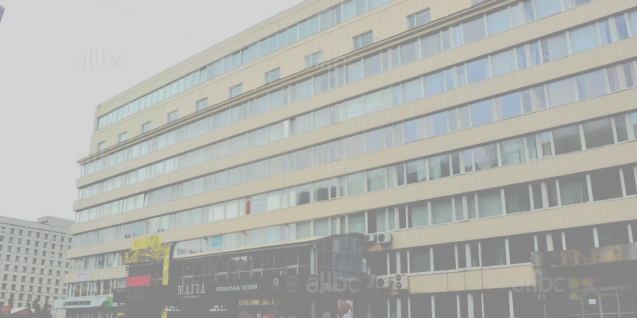
01133, Kyiv, blvd. Lesi Ukrainky 26 (block L26), office 613
Email Phone number+380443395088
We workSchedule: from 10:00 to 18:00
Weekend: Sunday
Entrust the settlement of legal disputes to the GRANDLIGA team of professionals! Get the highest level of legal services.
We are ready to start discussing your task. We will contact you shortly.
Back