31.07.2022
1145


31.07.2022
1145
15.06.2021
800
The business sector of the country is overflowing with problem debt created by unscrupulous debtors. That is why, in order to prevent the use of a legal entity as a tool for unjust enrichment at someone else’s expense, the legislator constantly implements and expands additional mechanisms to protect the rights and interests of creditors from such unscrupulous debtors.
The specified mechanisms are enshrined in the current Code of Ukraine on Bankruptcy Procedures, and are implemented by bringing the controlling persons of the debtor to joint (Part 6, Article 34) and/or subsidiary liability (Part 2, Article 61) for the debts of their company.
The conclusions of the Supreme Court on the application of relevant norms and the regulation of non-standard decisions of such persons regarding violation of the established order of prosecution play an important role in the implementation of the procedure and grounds for bringing controlling persons to property liability.
Joint and several liability applies to any members or management bodies of the debtor (director, board of directors, supervisory board, general meetings, etc.) in case of failure to apply to the court within a month with a statement to initiate proceedings in the event of a threat of insolvency (for example, meeting the demands of one creditor will lead to the impossibility of meeting the demands of other creditors).
It should be taken into account that a person can be held jointly and severally liable if he is guilty of such inaction. Jurisprudence is based on the principle of the fault of the manager (member of the management body) regarding inaction in submitting an application for insolvency. At the same time, such a person has the right to deny the presence of guilt in such inaction, for example, if he objectively expected to overcome the signs of bankruptcy in a reasonable time in good faith, or considered such financial difficulties to be temporary, or did everything possible to avoid insolvency, etc.
The list of such refutations is not exhaustive and in each specific case the court assesses such circumstances individually, taking into account the determination of the moment of awareness of the criticality of the situation, which obviously violates the normal regime of economic activity and creates negative consequences for creditors and the debtor.
Among other criteria taken into account by the court for making a decision on bringing a person to justice are, in particular, the specifics of the debtor’s activities, the tactics of implementing the business plan, the reasons that led to the emergence of financial difficulties, etc., since not all complications in the debtor’s activities are an unconditional basis for initiating the procedure bankruptcy at the request of the debtor’s management body.
If the court recognizes the refutations as reasoned and reasonable, taking into account the objectivity of other criteria, the manager (or any other member of the management body) may be released from responsibility.
In practice, there are cases when the circumstances of the threat of bankruptcy lasted for a certain period of time, during which there was a change of managers, each of whom managed the debtor for more than a month, but did not apply to the court within a month with a declaration of bankruptcy. The position of the Supreme Court in such a situation boils down to the fact that leaving the position of the head or other member of the management body is not a reason for exemption from responsibility. And the court decides on the issue of involving each person in joint and several liability individually, depending on the reasonableness and good faith of the latter’s actions while in office.
Subsidiary liability applies to any persons influencing the debtor’s actions or giving binding instructions to him (in particular, founders, participants, shareholders, or other persons, including the director) in case of their fault for the debtor’s bankruptcy.
The practice of the Supreme Court shows that in order to bring the specified persons to subsidiary responsibility, it is not necessary to have a verdict against them. At the same time, the legislation does not contain a detailed list of actions or inactions that constitute the objective side of such an offense.
However, from the analysis of judicial practice, the following can be distinguished in particular: acquisition of property in the absence of funds for settlements; making a decision to withdraw property that led to insolvency; approval or conclusion of agreements on unfavorable terms; entering into transactions with firms that obviously cannot fulfill their obligations (for example, one-day firms), giving instructions to enter into clearly unprofitable transactions; appointing dubious persons to managerial positions (for example, “denominations” or “pounds”); making important business decisions without a reasonable or bona fide sense for it, etc.
But in any case, committing one of the above-mentioned actions does not indicate 100% fault of the controlling person, and in order to implement the mechanism of subsidiary liability, it is necessary to analyze the history of transactions made under the influence of such persons, which contributed to the emergence of financial difficulties, their further dynamics of development or complications, and transition to the stage of objective insolvency.
The amount of subsidiary liability is the difference between the amount of creditor claims and the liquidation mass. The current norm, part 2 of Art. 61 of the Code on Bankruptcy Procedures provides for the application of subsidiary liability only in case of insufficient assets of the debtor to satisfy creditor claims. Therefore, the application of the mechanism of bringing controlling persons to this type of responsibility should be started either after the formation of the liquidation mass by the liquidator (in the event that it is obviously clear that the liquidation mass will not be sufficient to satisfy all creditor claims) or after the completion of the procedure for the realization of all the debtor’s assets (in the event that after such the realization of the received sums turned out to be insufficient for full repayment of creditor claims).
If you are interested in debt recovery through the use of mechanisms of holding controlling persons to property liability or, conversely, you intend to protect yourself from being held to property liability for the company’s debts, contact us for consultation or full support of the case.
16.04.2024
407
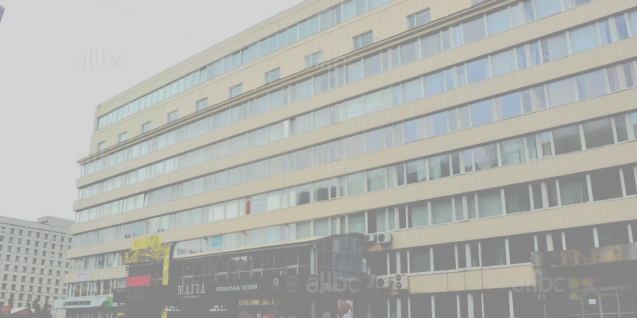
01133, Kyiv, blvd. Lesi Ukrainky 26 (block L26), office 613
Email Phone number+380443395088
We workSchedule: from 10:00 to 18:00
Weekend: Sunday
Entrust the settlement of legal disputes to the GRANDLIGA team of professionals! Get the highest level of legal services.
We are ready to start discussing your task. We will contact you shortly.
Back